Intuitively, we might think of creative writing and academic writing as fundamentally opposed forms of expression. While creative writing embraces subjectivity and formal innovation, academic writing emphasizes argumentation, the effacement of the author, and a rigid adherence to convention. In terms of both craft and methodology, the distance between creative and academic writing appears insurmountable.
Over the last half-century, however, several scholarly streams from feminism to postmodernism to Black studies have redefined the conventions of academic writing by exposing and embracing subjectivity and subjugated archives as starting points for scholarly expression, if not an ethically necessary position for arguing for the reality of various modes and lived experiences. In the process, these fields have questioned whether the emphasis on traditional discourse and an impersonal, empirical approach to academic writing is the only method for the production of knowledge and scholarly analysis.
While these innovations in scholarly expression wrought by feminist, postmodern, and Black studies writers and academics have reframed academic writing, what does this mean for the student? Through engaging creatively with academic work, this workshop will explore how creative writing can help us to produce argumentative writing that is both valid and engrossing.
This workshop will employ a creative-critical method that relies on play and imitation as a starting point for building student’s writing skills. In this workshop, we will compose work that imitates various creative styles (object description, poetry, metaphor, etc.) and use these techniques as a foundation for writing critically. The aim is that through imitation, students can develop a style through which they can confidently express their own ideas and arguments.
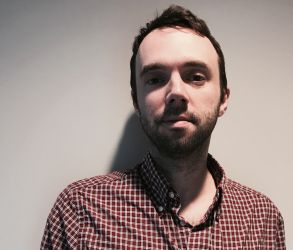
Dewey Fox holds a PhD in English from Ohio University and an MFA in poetry from the University of Oregon. He is currently a Fulbright scholar based at Johannes Gutenberg-Universität Mainz, where he has given lectures on poetic forms. His poems have appeared in Best New American Poets: 2024, Northwest Review, Poet Lore, and elsewhere.